
A release day incident where every graph looked “mostly fine” A marketplace team rolled out a new order-confirmation pipeline built on Node.js workers and an API gateway. At first, dashboards looked reassuring. CPU stayed under 60 percent, pod count autoscaled…
Category: Node.js
-
The API Was Up, the Event Loop Was Not: A 2026 Node.js Systems Playbook for Latency Integrity Under Load
A release night where uptime stayed green and customers still churned A SaaS team rolled out a new billing and notifications flow on a Thursday evening. Their Node.js services stayed up, pod health checks were green, and error rates looked…
-
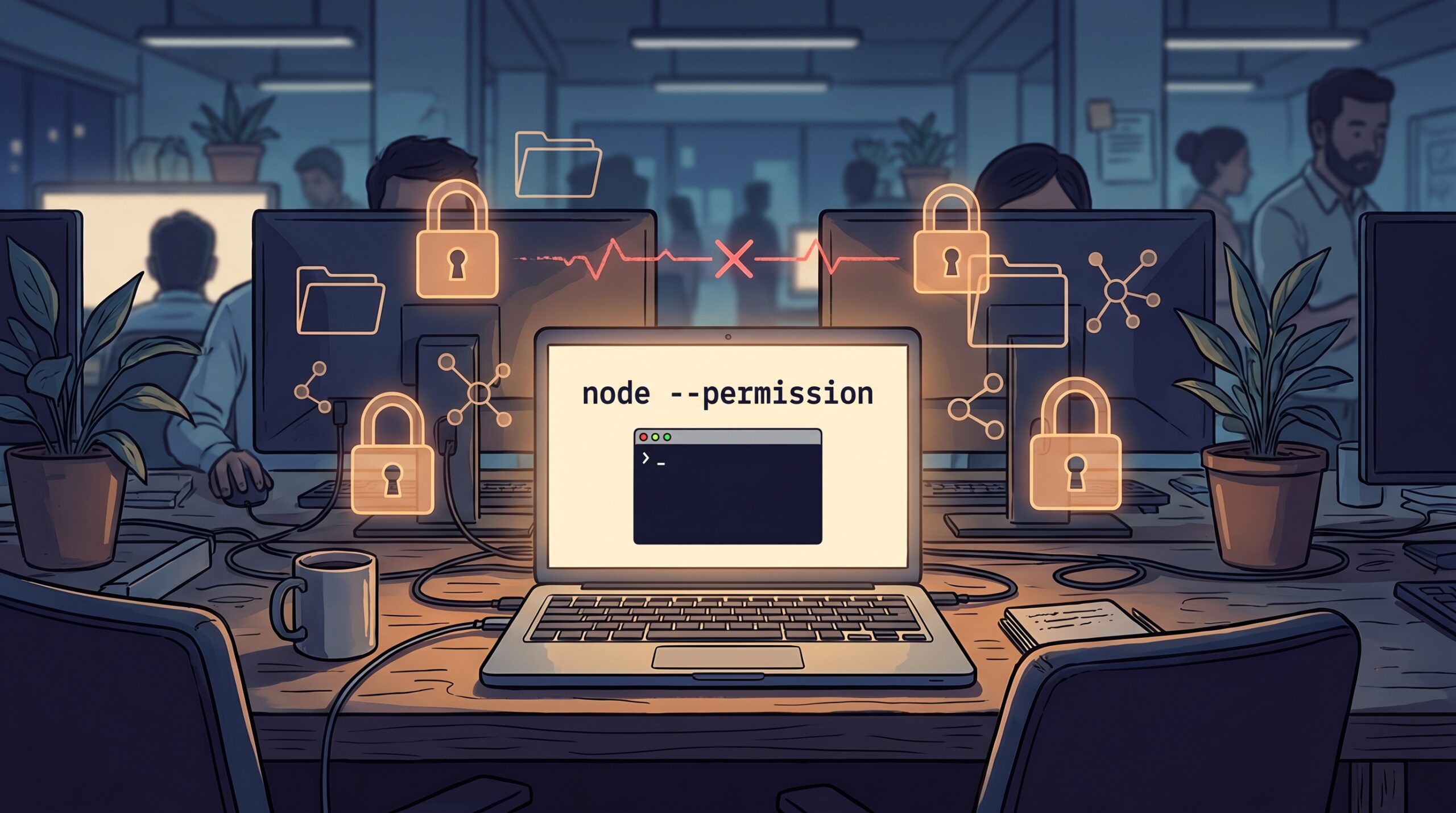
The Build Script That Touched Production Secrets: A 2026 Node.js Permission Model Rollout Playbook
A practical Node.js permission model rollout guide: least-privilege runtime, safer npm script handling, and incident-tested steps for production teams.
-
The Queue Looked Healthy, Customers Were Not: A 2026 Node.js Systems Guide to Outcome-Based Reliability
A production incident where every dashboard looked fine A subscription company rolled out a Node.js billing workflow update on a Wednesday night. Their ops board looked reassuring: workers were up, queue depth was stable, API error rates were low, and…
-
The Green Dashboard, Broken Journey: A 2026 Node.js Systems Playbook for Engineering Real Reliability
A quick story from a release that looked perfect A subscription platform shipped a major billing refactor on a Tuesday night. The team had done everything “right” on paper: tests passed, CPU stayed low, error rates looked normal, and all…
-
The Busy Queue That Did Nothing: A Node.js Systems Playbook for Real Throughput, Not Simulated Productivity
A launch week story that looked productive until it didn’t A team shipped a new Node.js job system to process onboarding emails, CRM sync, and account scoring. Their dashboard looked amazing: workers were “active,” queue throughput looked high, and commit…
-
The Retry Spiral That Took Down Checkout: A Node.js Systems Playbook for Load Shedding, Idempotency, and Queue Discipline
A Saturday incident that looked like “just a traffic spike” An e-commerce team saw a normal weekend surge, nothing unusual. CPU was healthy, autoscaling was active, and the Node.js API stayed mostly responsive. But checkout success dropped from 97% to…
-
The Peripheral You Forgot to Threat-Model: Hardening Node.js Systems Across Cloud, Edge, and Home-Server Reality
A quick story that changed one team’s architecture roadmap A startup running a Node.js media workflow platform had excellent cloud hygiene on paper. Their API services were containerized, secrets were in a managed vault, and CI pipelines required approvals for…
-
Node.js Systems in 2026: Building Event-Driven Services That Stay Fast, Observable, and Sane Under Load
A 14-minute outage caused by a “tiny” queue change A team I worked with recently changed one setting in a Node.js worker pool, increasing concurrency from 20 to 80 to clear a backlog faster. It worked for about six minutes….
-

Backend Reliability in 2026: Build Trustable Services, Not Just Passing Deploys
A Tuesday outage that looked like a DNS bug, but wasn’t At 9:12 AM, a product team noticed checkout confirmations were delayed by 20 to 40 minutes. API health checks were green. CPU was fine. Database latency was normal. The…
-

API rate limiting with Redis in 2026: Practical Implementation Guide
API rate limiting with Redis in 2026: Practical Implementation Guide API rate limiting protects uptime and fairness. Redis remains a practical limiter backend because atomic operations are fast and easy to scale. Why this matters in 2026 Prevents abusive traffic…
-

Node.js background jobs in 2026: Practical Implementation Guide
Node.js background jobs in 2026: Practical Implementation Guide Background jobs are where reliability debt accumulates quickly. In 2026, production-safe Node.js job systems need idempotency, bounded retries, dead-letter workflows, and end-to-end tracing. Why this matters in 2026 At-least-once delivery means duplicates…